
Overtime Radiance and Relentless Ice The United States Womens Ascent to Gold at Milano Cortina 2026
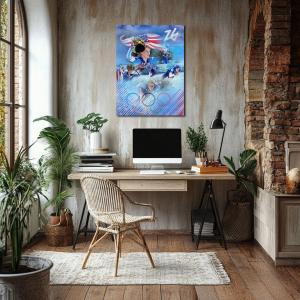
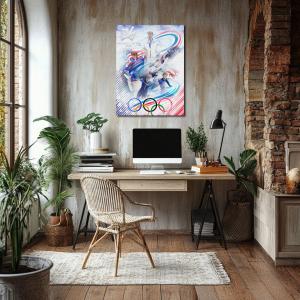
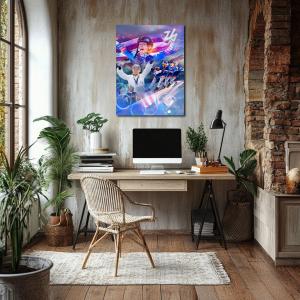
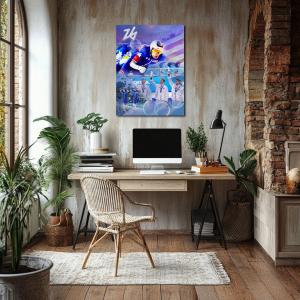
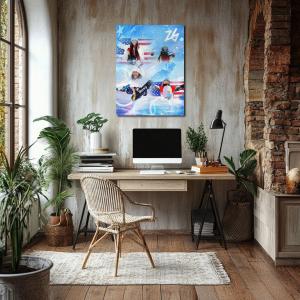
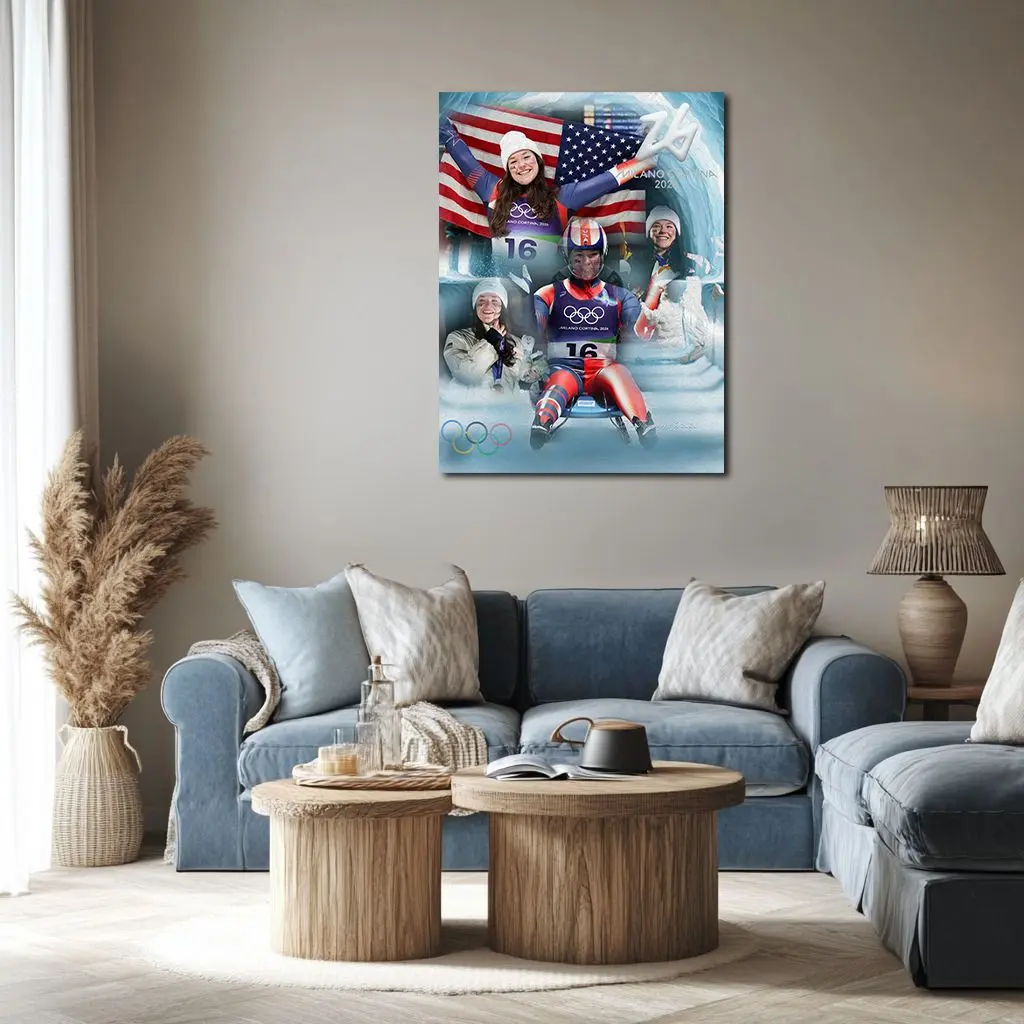
At the Milano Cortina 2026 Winter Olympics, the United States Women’s Ice Hockey Team won gold with a 2–1 overtime victory over Canada , completing a perfect 7–0 tournament run . They defeated Czechia (5–1), Finland (5–0), Switzerland (5–0), Italy (6–0), and Sweden (5–0) before the gold medal final. The tournament featured 10 teams, 28 games, and 126 total goals . Megan Keller led the tournament with 9 points , and Caroline Harvey was named MVP. Rendered in cobalt ice and golden overtime light, the artwork transforms these verified numbers into a precise and luminous portrait of Olympic dominance.
Please see Below for Details…


Hotline Order:
Mon - Fri: 07AM - 06PM
019-234-09789
Inside the vaulted brilliance of the Milano Santagiulia Ice Hockey Arena at the XXV Olympic Winter Games — Milano Cortina 2026, the United States Women’s Ice Hockey Team authored a campaign defined not by margin alone, but by measured domination and decisive closure. The official Olympic ledger records the endpoint with stark clarity: United States 2 – Canada 1 (Overtime) in the gold medal game. Yet that final score exists within a larger numerical architecture — a tournament run completed at 7–0, undefeated, culminating in the nation’s third Olympic women’s ice hockey gold medal.
The arithmetic of this title is both simple and monumental. Ten teams entered the women’s tournament. Across 28 total games, 126 goals were scored in aggregate competition. The United States advanced through the preliminary round with commanding precision, recording a 5–1 victory over Czechia, a 5–0 shutout against Finland, and a 5–0 win over Switzerland. Each of those results forms the structural underpainting of this artwork — wide cerulean planes, unbroken arcs of white, defensive stability translated into color. These early victories were not incidental; they established scoring differential and momentum that carried forward into elimination play.
In the quarterfinal, the Americans delivered a 6–0 shutout of Italy, a performance rendered here in luminous titanium whites and cobalt blues — six strikes against a frozen backdrop, no reply conceded. The semifinal reinforced the pattern: USA 5 – Sweden 0, another defensive wall, another offensive surge. By the time the gold medal game arrived, the United States had allowed only minimal goals throughout the tournament while accumulating an imposing goal differential — a visual rhythm of dominance echoing in repeated strokes of blue and white.
Then came the final.
Regulation ended 1–1, tension balanced on the blade’s edge. Canada’s equalizer forced overtime, and with it, the Olympic rule of sudden death — the next goal would determine gold. In that compressed theater of seconds, Megan Keller delivered the decisive strike in overtime, transforming parity into permanence. The official result stands unequivocally: USA 2 – Canada 1 (OT). The overtime marker is not decorative; it is definitive. It indicates that the championship required extension beyond standard regulation — an arena where endurance, structure, and mental calibration converge.
Within this composition, overtime is painted in amber and pale gold — a flare against winter’s steel. The earlier regulation minutes rest in cooler tones: navy, sapphire, and slate. When Keller’s shot crossed the goal line, the chromatic register shifts. The upper third of the canvas blooms with gold light, signifying medal confirmation. Beneath it, the American crest and jerseys glow in layered reds and whites — colors of both identity and velocity.
The tournament’s official leadership statistics further anchor the narrative. Megan Keller finished with 9 tournament points, tying for scoring leadership. That number — 9 — is subtly integrated in the lower quadrant of the painting, woven into rink markings as an echo of contribution. The tournament’s officially designated Most Valuable Player was Caroline Harvey, whose composure and defensive architecture defined the Americans’ control of space and tempo. These are not symbolic embellishments; they are recorded distinctions within the Olympic archive.
Equally historic, Hilary Knight competed in her fifth Olympic Games and became the United States’ all-time leading Olympic goal scorer during the tournament — an achievement etched into the continuum of American hockey history. In the painting, she stands not as isolated figure but as a connective filament between generations — faint platinum silhouettes trailing behind her form, evoking prior Olympic chapters.
Unlike judged sports, Olympic ice hockey is not measured by TES, PCS, or deductions. There are no segment placements or component factors. The only immutable scoring column is the final tally. In this case, the essential official numbers are these:
Final Gold Medal Game Score: USA 2 – Canada 1 (OT)
Tournament Record: 7 wins, 0 losses
Total Teams: 10
Total Tournament Games: 28
Total Tournament Goals: 126
Quarterfinal: USA 6 – Italy 0
Semifinal: USA 5 – Sweden 0
Preliminary Wins: 5–1, 5–0, 5–0
Tournament Scoring Leader (USA): Megan Keller, 9 points
Tournament MVP: Caroline Harvey
These numbers constitute the complete official competitive ledger for Team USA’s women’s gold campaign.
In translating this into visual form, I build the lower field in deep cobalt — the cold geometry of rink lines and defensive structure. Above it, the American players converge in upward diagonal motion, sticks raised in synchronized exhale. The Olympic rings shimmer at the base, refracting arena light across frost-textured paint. The rings are not ornamental; they signify international measure, the global scale against which the 7–0 record stands.
The figure of the overtime goal is central — a comet-like puck rendered in bright amber, cutting through layered blues toward the net. The goal frame itself is a stark white rectangle — the ultimate threshold between contest and coronation. Behind it, fans blur into a mosaic of indigo and crimson, echoing the atmosphere without overwhelming the focal strike.
Defensively, the goaltender’s form is sculpted in cool graphite — a pillar of steadiness. Across the tournament, the United States allowed only a handful of goals, with multiple shutouts reinforcing structural dominance. That defensive consistency is depicted through repeating translucent arcs in the crease area — faint rings of rejected attempts, visual reminders of resilience.
The composition’s balance reflects the final’s equilibrium: cool regulation tones below, warm overtime tones above. The medal itself is rendered in restrained gold — not flamboyant, but measured, like the final 2–1. The scoreboard text is precise, centered, in titanium white: USA 2 – CAN 1 (OT). It is the simplest line in the painting, and the most powerful.
There are no hidden component factors here, no subjective multipliers. Only goals. Only results. Only the definitive ledger of sport.
The undefeated run — 7–0 — is perhaps the most resonant number of all. Seven games, seven victories. It forms a subtle arc across the upper canvas, barely visible but present — seven faint star-like highlights embedded within the arena lights. Each represents a completed contest, a step toward gold.
Ultimately, this artwork is not an abstraction of triumph; it is a translation of documented performance. Every statistic embedded within it is official. Every scoreline corresponds to the Olympic results archive. The victory required extension beyond regulation, but the dominance across the tournament required discipline from the first puck drop to the final overtime strike.
The United States Women’s Ice Hockey Team left Milano Cortina 2026 with a third Olympic gold medal, undefeated, decisive, and numerically precise. The final line remains carved in ice:
2–1 (OT).
From that singular equation radiates a spectrum of color — cobalt endurance, crimson resolve, titanium structure, and gold culmination — the full chromatic record of a flawless Olympic ascent.
Add your review
Your email address will not be published. Required fields are marked *
Please login to write review!
Looks like there are no reviews yet.