

A More Perfect Union: The Lincoln Memorial and the Unbreakable Spirit of American Unity (1776–2026)
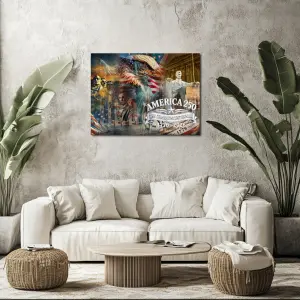
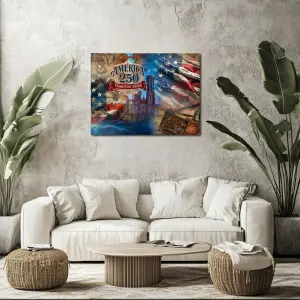
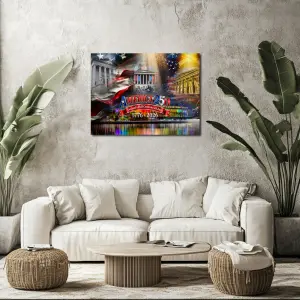
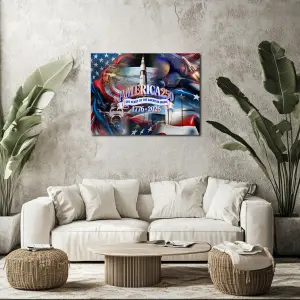
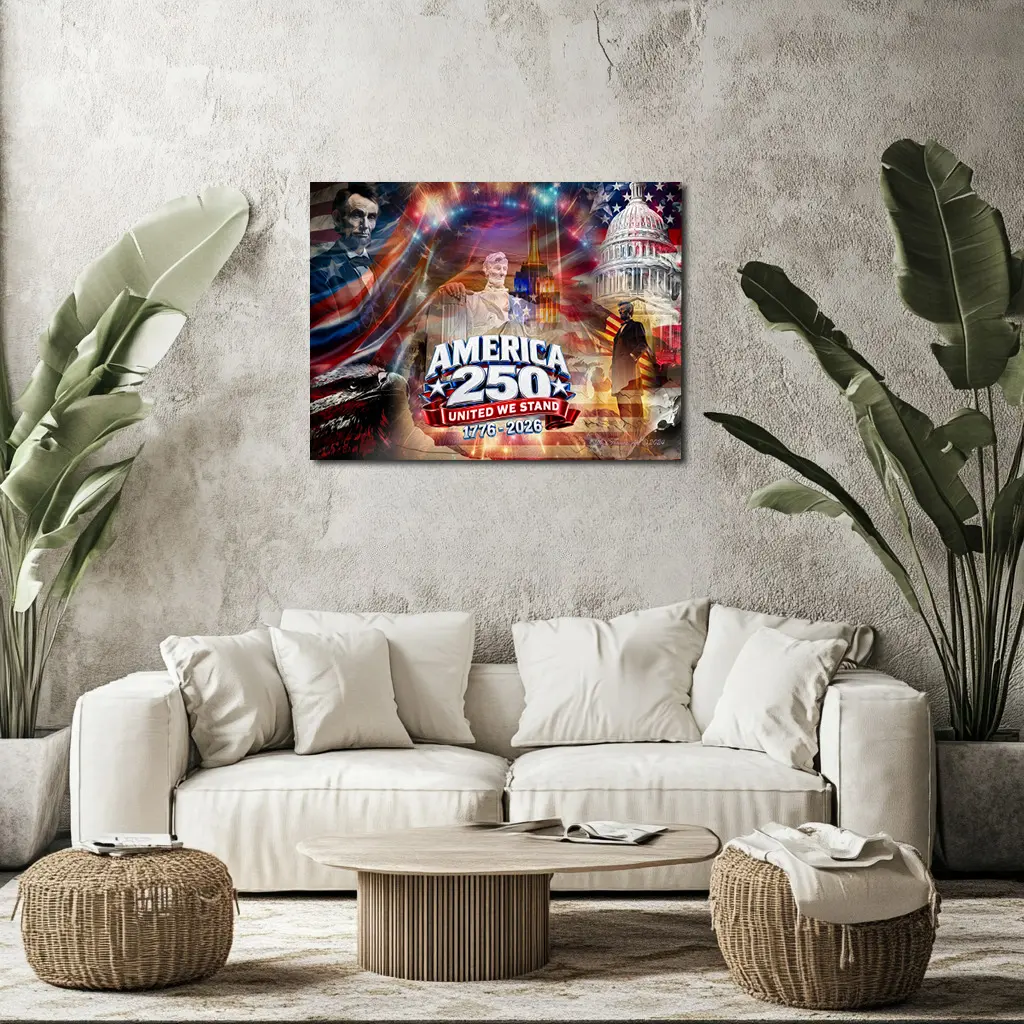
This artwork commemorates America's 250-year journey (1776–2026) by uniting the Lincoln Memorial , Abraham Lincoln , the Washington Monument , the United States Capitol , the American flag , and the bald eagle into a powerful tribute to national unity and democratic endurance. The description naturally incorporates the history of each symbol, from Lincoln's leadership during the Civil War and the preservation of the Union to the construction of the Lincoln Memorial, the Washington Monument, and the Capitol as lasting monuments to the nation's ideals. Rich patriotic colors, luminous lighting, layered textures, and balanced composition reinforce themes of reconciliation, constitutional government, equality, resilience, and hope. More than a celebration of historic landmarks, the artwork presents unity as America's greatest continuing achievement, reminding viewers that the nation's future, like its past, depends upon the shared commitment of its people to build a more perfect Union .
Please see Below for Details…


Hotline Order:
Mon - Fri: 07AM - 06PM
019-234-09789
When I created this artwork, I wanted to explore one of the most profound ideas in the American story—not simply freedom, but unity. Independence gave birth to the United States in 1776, yet unity is what allowed the nation to endure. Across 250 years, America has experienced moments of remarkable achievement and periods of deep division. Through every challenge, the belief that one nation could rise above its differences has remained one of its greatest strengths. That belief became the soul of this composition.
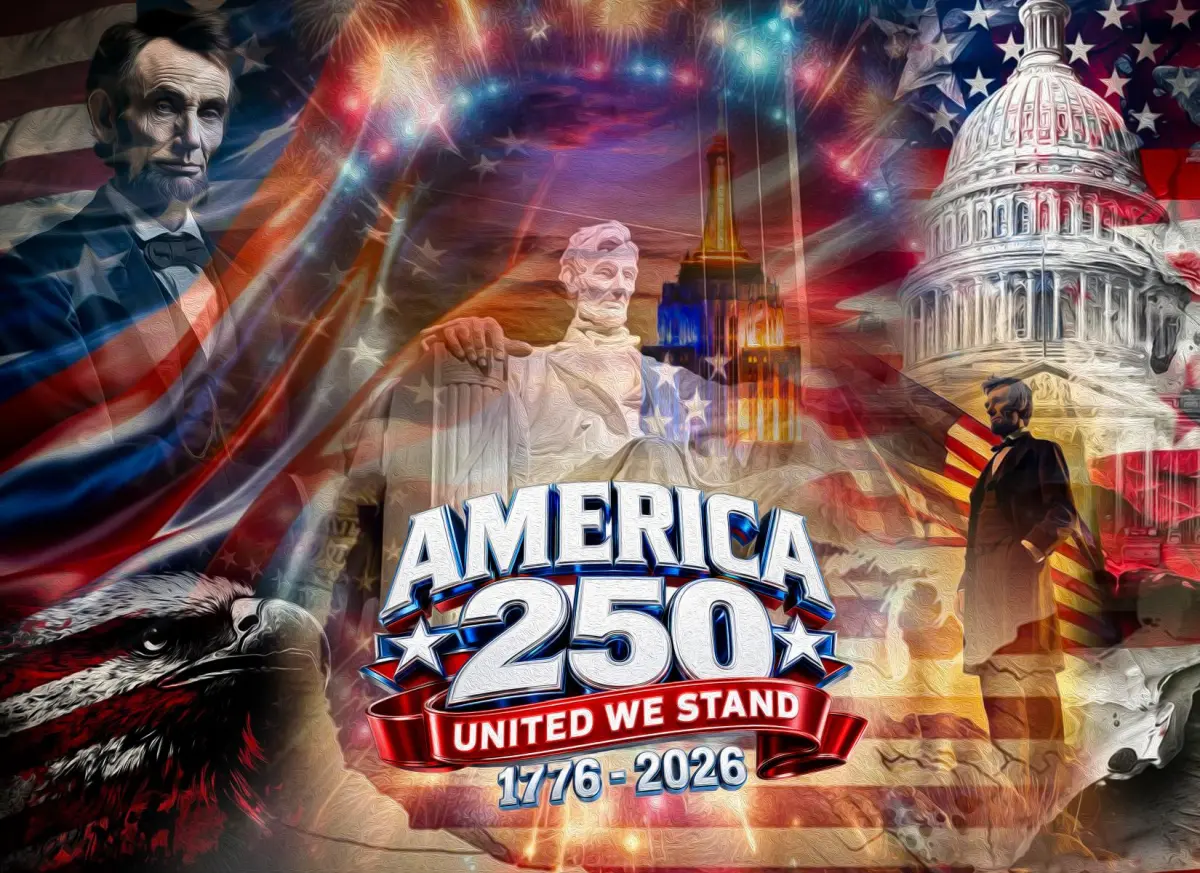
At the heart of the artwork stands the America 250 emblem carrying the powerful words "United We Stand." I wanted these words to serve as more than a patriotic slogan. They represent a timeless principle that has guided the American experiment from its founding through generations of conflict, reconciliation, and renewal. Every symbol surrounding the emblem contributes to that single message—that unity is not inherited; it is continually built by the people who choose to preserve it.
Dominating the center of the composition is the Lincoln Memorial, bathed in warm, golden light. I placed it at the heart of the artwork because no monument better represents the nation's determination to remain united. Completed in 1922 and designed by architect Henry Bacon, the memorial honors President Abraham Lincoln, the sixteenth President of the United States. Built in the style of a Greek Doric temple, its 36 columns originally symbolized the thirty-six states that existed at the time of Lincoln's death in 1865, expressing the hope that a divided nation could once again stand together.
Within the memorial sits the magnificent marble statue of Abraham Lincoln, sculpted by Daniel Chester French. Seated in quiet reflection rather than triumph, Lincoln's posture conveys strength balanced by humility. I wanted his presence to feel contemplative because history remembers him not only as a wartime leader but as a statesman whose greatest ambition was to preserve the Union. During the American Civil War (1861–1865), Lincoln guided the nation through its darkest constitutional crisis, believing that the republic established in 1776 could not survive permanently divided. His leadership preserved the Union, and through the Emancipation Proclamation of 1863, he transformed the Civil War into a struggle not only for national survival but also for human freedom.
To reinforce Lincoln's enduring influence, I included his portrait in the upper left of the composition. Rather than presenting him as a distant historical figure, I wanted his thoughtful expression to watch over the nation's continuing journey. His legacy extends beyond his presidency. His words in the Gettysburg Address—that government "of the people, by the people, for the people" should not perish from the earth—remain among the most enduring affirmations of democratic government ever spoken. Those ideals continue to resonate as America celebrates its 250th anniversary.
Rising gracefully behind the memorial is the Washington Monument, linking two of America's most influential presidents across time. Construction of the monument began in 1848, paused during political turmoil and the Civil War, and was completed in 1884. Standing over 555 feet tall, it honors George Washington, whose leadership secured American independence and established the presidency upon principles of constitutional restraint. By placing the Washington Monument behind Lincoln, I wanted to create a visual bridge between the nation's birth and its preservation. Washington founded the republic; Lincoln ensured it would endure.
On the right side of the composition stands the illuminated United States Capitol, whose dome glows against the evening sky. Construction of the Capitol began in 1793, and it has served as the home of the legislative branch ever since. Throughout wars, national expansion, economic transformation, and social reform, it has remained the place where the representatives of the American people debate, legislate, and shape the future of the republic. Including the Capitol emphasizes that unity depends not only on shared ideals but also on democratic institutions capable of resolving differences through law rather than conflict.
The American flag flows across the composition like a living current, wrapping every historical figure and monument within its embrace. The thirteen stripes honor the original colonies that declared independence in 1776, while the fifty stars symbolize a Union that expanded across a continent while remaining one nation. I intentionally allowed the flag to move dynamically through the artwork because unity is never static. Like the fabric itself, it bends with changing times yet remains woven together by shared purpose.
Near the lower right, another figure of Lincoln stands in quiet contemplation before the Capitol. This smaller figure serves as a symbolic reminder that leadership is ultimately measured not by monuments, but by service. His gaze toward the Capitol reflects the continuing responsibility of every generation to strengthen democratic institutions and preserve the constitutional principles upon which the nation was founded.
The bald eagle, partially emerging from the lower left corner, represents another enduring national symbol. Adopted as the national emblem in 1782, it embodies courage, vigilance, resilience, and freedom. I chose not to make the eagle dominate the composition. Instead, it quietly observes the unfolding narrative, reinforcing the idea that liberty survives through constant watchfulness rather than unquestioned certainty.
Color became one of my most expressive tools in telling this story. Rich crimson reflects sacrifice, reminding us of those who fought to preserve both independence and the Union. Deep blue represents stability, justice, and the enduring framework of constitutional government. Brilliant whites illuminate the Lincoln Memorial and Capitol, symbolizing hope, integrity, and the pursuit of equality. Warm gold surrounding Lincoln suggests wisdom forged through hardship, while soft amber tones stretching across the horizon symbolize reconciliation and the promise of new beginnings. Subtle violets and midnight blues within the evening sky acknowledge that history has never been without darkness, yet they also reveal the stars that continue to guide the nation forward.
Lighting moves deliberately across the artwork. A gentle radiance surrounds Lincoln, allowing him to emerge as the emotional heart of the composition without overwhelming the surrounding symbols. The Washington Monument catches the fading light of the sky, acting as a beacon that links the revolutionary generation with the generations that followed. The illuminated Capitol suggests that democracy remains active and alive, while soft reflections within the flag create a sense of movement and continuity. I wanted every source of light to symbolize hope earned through perseverance rather than optimism without struggle.
The textures throughout the artwork invite viewers to feel the weight of history. The smooth marble of the Lincoln Memorial contrasts beautifully with the weathered stone of the Washington Monument and the detailed architectural surfaces of the Capitol. The flowing folds of the flag create movement, while Lincoln's sculpted features and the eagle's intricate feathers add realism and emotional depth. These varied textures transform the composition into a visual tapestry woven from memory, sacrifice, and aspiration.
Compositionally, every element guides the viewer toward Lincoln before expanding outward to the Capitol, Washington Monument, and surrounding symbols. Strong vertical forms express endurance, while sweeping curves created by the flag soften the geometry of the architecture, creating harmony between strength and compassion. The balanced arrangement reflects the central message I wanted the artwork to convey—that lasting unity emerges when principle and humanity exist together.
Artistically, I combined symbolic realism with contemporary digital collage, allowing multiple centuries of American history to coexist within a single visual moment. Layered imagery, luminous color grading, painterly textures, and cinematic lighting transform familiar national landmarks into a unified narrative that celebrates both historical memory and future possibility. Rather than illustrating one event, I sought to portray the enduring ideals that connect every chapter of the American experience.
The atmosphere is solemn yet hopeful, patriotic yet reflective. I did not want this artwork to celebrate unity as something easily achieved. Instead, I wanted it to honor unity as one of America's greatest accomplishments—earned through courage, compromise, resilience, and an unwavering belief that a diverse people could remain one nation.
Every symbol carries a story. Abraham Lincoln represents moral courage, constitutional leadership, and the preservation of the Union. The Lincoln Memorial stands as a national sanctuary dedicated to freedom, equality, and reconciliation. The Washington Monument honors the founding of the republic through principled leadership. The United States Capitol reflects representative democracy and the continuing work of self-government. The American flag symbolizes a nation united across generations, while the bald eagle reminds us that liberty requires vigilance as well as strength. Together, these symbols tell the story of a country that has continually sought to become, in the words of its Constitution, "a more perfect Union."
As the artist, my hope is that viewers see this artwork not simply as a tribute to famous monuments, but as a reflection on the enduring character of the American people. Every generation inherits both the achievements and the unfinished work of those who came before. The responsibility to strengthen unity, defend liberty, and pursue justice belongs not only to presidents or lawmakers, but to every citizen who believes in the promise first declared in 1776.
Ultimately, "A More Perfect Union: The Lincoln Memorial and the Unbreakable Spirit of American Unity (1776–2026)" is my tribute to a nation that has repeatedly found the strength to heal, rebuild, and move forward together. It honors 250 years of shared history while reminding us that America's greatest monument is not built of marble or stone—it is the enduring commitment of its people to remain united in the pursuit of liberty, equality, and the common good.
Add your review
Your email address will not be published. Required fields are marked *
Please login to write review!
Looks like there are no reviews yet.