

The House of Knowledge: The Smithsonian Institution Castle and America's Enduring Quest for Discovery (1776–2026)
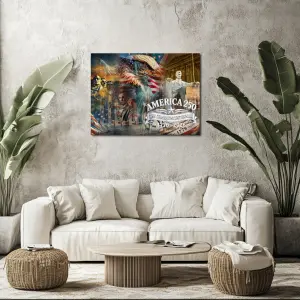
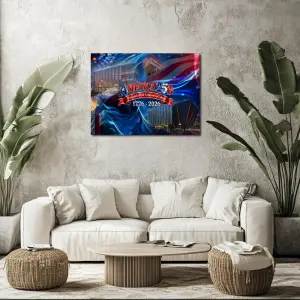
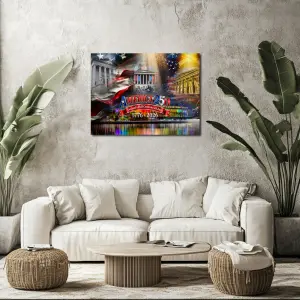
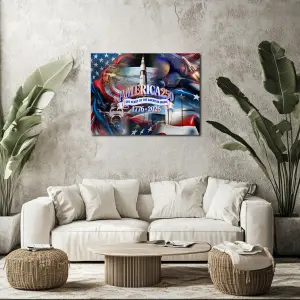
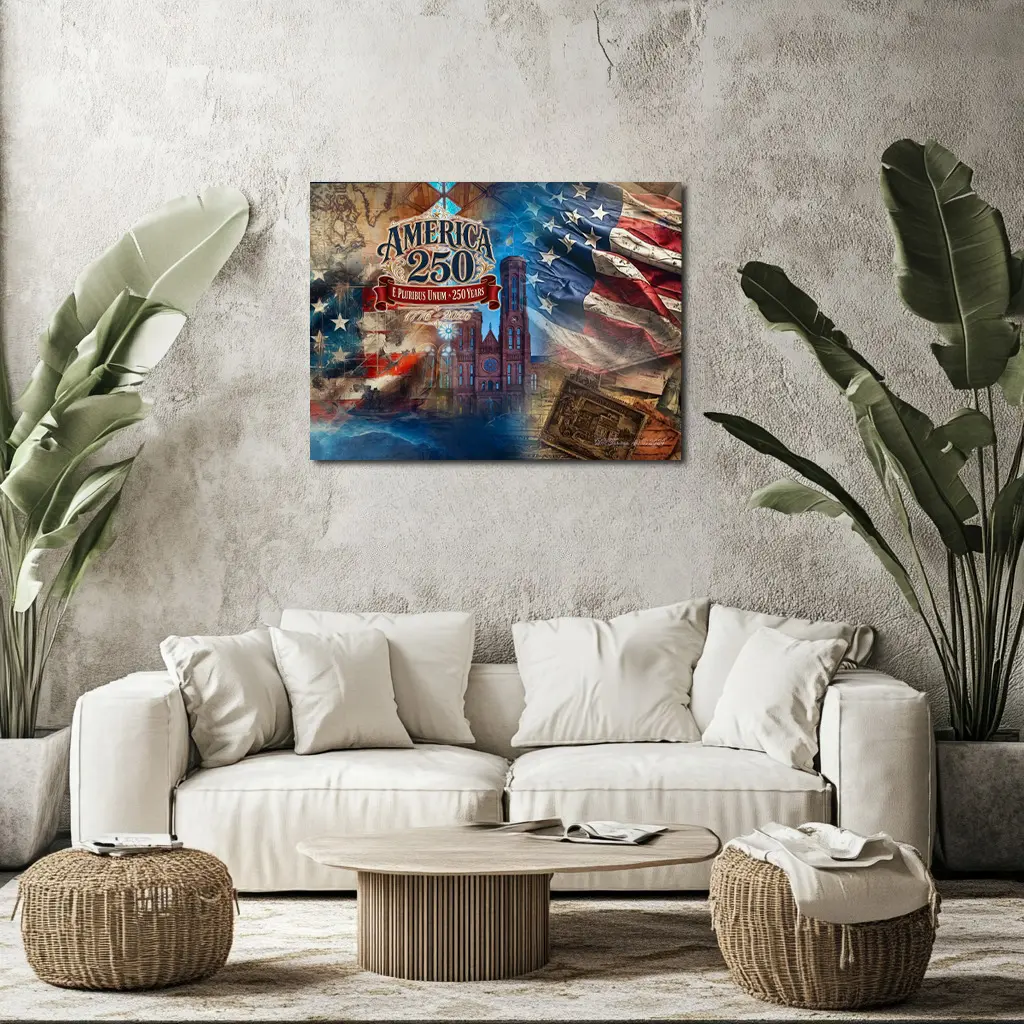
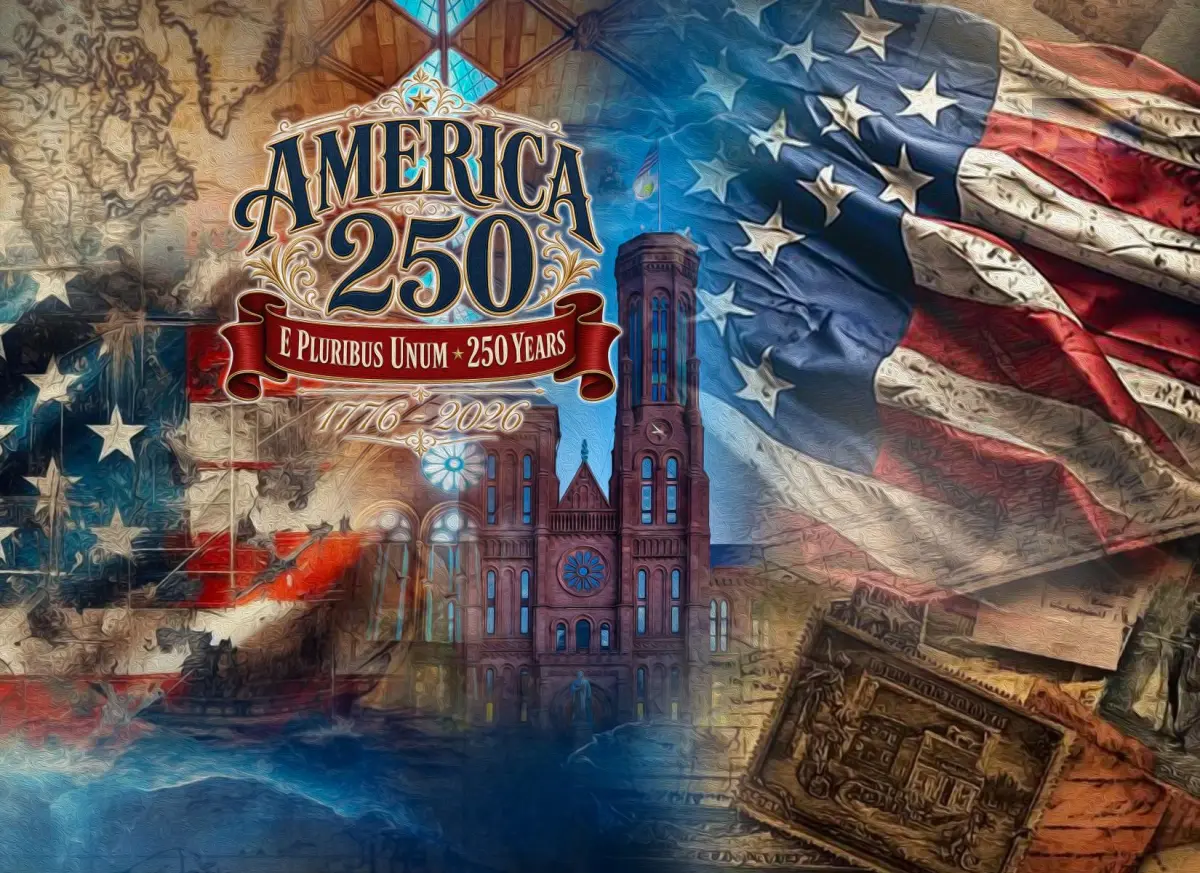
This artwork celebrates America's 250-year journey (1776–2026) through the enduring symbolism of the Smithsonian Institution Castle , the American flag , historic maps, archival documents, a sailing vessel of exploration, and the America 250 emblem. The description naturally incorporates the history of the Castle, its construction between 1847 and 1855 , its design by James Renwick Jr. , the founding of the Smithsonian Institution in 1846 , and the visionary bequest of James Smithson , whose mission was to promote "the increase and diffusion of knowledge." It also highlights the Castle's role as the birthplace and symbolic heart of the Smithsonian's global network of museums, research centers, and educational institutions. Rich patriotic colors, warm illumination, layered historical textures, and balanced composition create a visual narrative celebrating education, exploration, preservation, and lifelong learning. More than a tribute to a historic building, the artwork honors the timeless pursuit of knowledge, reminding viewers that America's most enduring achievements are found not only in its history, but in its continuing commitment to discovery, curiosity, and the sharing of wisdom with future generations.
Please see Below for Details…


Hotline Order:
Mon - Fri: 07AM - 06PM
019-234-09789
When I made this artwork, I wanted to celebrate something that has quietly shaped every chapter of the American story—not a battlefield, a presidency, or a monument, but the pursuit of knowledge itself. Nations become stronger through courage, yet they become wiser through education, research, curiosity, and discovery. As America commemorates 250 years of independence (1776–2026), I wanted this composition to honor the institutions that preserve the nation's memory, expand human understanding, and inspire future generations to ask questions that have never been asked before. At the heart of that vision stands the Smithsonian Institution Castle, the symbolic home of the largest museum, education, and research complex in the world.
At the center of the composition rests the America 250 emblem bearing the historic motto "E Pluribus Unum – Out of Many, One." I deliberately chose this placement because knowledge itself unites humanity. Every scientific discovery, artistic masterpiece, historical artifact, cultural tradition, and technological breakthrough preserved by the Smithsonian becomes part of a shared human inheritance. The motto reflects more than national unity—it reflects the gathering of countless ideas, cultures, disciplines, and generations into one collective pursuit of understanding.
Rising proudly in the center of the artwork is the magnificent Smithsonian Institution Building, affectionately known as "The Castle." Constructed between 1847 and 1855 and designed by the renowned architect James Renwick Jr., the Castle was the first home of the Smithsonian Institution and remains its symbolic heart today. Built from distinctive Seneca red sandstone in a striking Norman Revival style blending Romanesque and Gothic influences, the building was intentionally designed to resemble the great centers of medieval scholarship, expressing the timeless connection between architecture and learning.
The Castle exists because of one extraordinary act of generosity. In 1829, the English scientist James Smithson left his fortune to the United States—a country he never visited—with the remarkable instruction that it be used "for the increase and diffusion of knowledge among men." Congress established the Smithsonian Institution in 1846, transforming Smithson's vision into one of the world's greatest centers of education, research, preservation, and public learning. I wanted this story to quietly flow through every element of the artwork because it reminds us that knowledge often becomes the greatest legacy one generation can leave to another.
The Castle became the birthplace of an institution unlike any other. When it opened in 1855, it housed laboratories, lecture halls, exhibition galleries, research collections, administrative offices, a library, and even the residence of the Smithsonian's first Secretary, Joseph Henry. Over time, as the Smithsonian expanded into museums dedicated to art, history, aviation, science, culture, natural history, and innovation, the Castle remained its symbolic headquarters—the place from which one of humanity's greatest educational missions continued to grow.
I chose to position the Castle at the center because I wanted it to represent more than a historic building. To me, it is a lighthouse of knowledge. Every museum that later emerged from the Smithsonian family—the National Museum of Natural History, the National Air and Space Museum, the National Museum of American History, the National Gallery partnerships, the National Zoo, research centers, archives, and libraries—can trace part of its story back to this remarkable building. The Castle became the doorway through which millions of visitors began their own journeys of discovery.
Flowing gracefully across the composition is the American flag, embracing the Castle within its stars and stripes. The thirteen stripes recall the colonies whose declaration of independence in 1776 created a new nation founded upon liberty and opportunity. The fifty stars represent a Union that would eventually become one of the world's leading centers of scientific research, higher education, artistic achievement, and innovation. I allowed the flag to move gently across the artwork because knowledge, like freedom, is never still. It grows, adapts, and reaches new generations with every passing year.
Surrounding the Castle are fragments of antique maps, historical documents, and architectural drawings. I intentionally layered these elements into the composition because they symbolize the extraordinary breadth of the Smithsonian's collections. Today the Institution preserves more than 150 million objects, ranging from fossils, minerals, and biological specimens to aircraft, spacecraft, works of art, cultural artifacts, manuscripts, scientific instruments, and priceless pieces of American and world history. Every object tells a story, and together they form one of humanity's greatest archives of collective memory.
Toward the lower portion of the composition, a historic sailing vessel emerges from the sea. I included it to symbolize exploration—not only geographic exploration across oceans, but intellectual exploration across every field of human knowledge. Long before satellites and laboratories transformed scientific research, explorers, naturalists, cartographers, and historians expanded humanity's understanding of the world through curiosity and careful observation. Their spirit continues within every Smithsonian museum and research center today.
The ocean itself became an important symbolic element in my composition. Water has always represented discovery, movement, and connection between civilizations. Here it reflects the journey of ideas traveling across continents and generations. Just as explorers once crossed oceans in search of new horizons, scholars, scientists, artists, and educators continue to navigate the vast oceans of knowledge that remain unexplored.
Color became one of the emotional foundations of the artwork. Rich crimson reflects passion, curiosity, and the determination required to pursue truth. Deep blue symbolizes wisdom, scholarship, and the endless possibilities of discovery. Brilliant white conveys clarity, honesty, and intellectual integrity. Warm amber surrounding the Castle suggests enlightenment, while earthy browns within the antique maps and documents remind us that today's knowledge is built upon centuries of human experience. Soft golden highlights flowing across the composition symbolize inspiration passing from one generation to the next.
Lighting plays an especially meaningful role throughout the artwork. A gentle radiance surrounds the Castle, allowing it to emerge naturally as the composition's intellectual center. I wanted the building to appear as though it were illuminated from within, reflecting the idea that knowledge itself becomes a source of light. Shadows remain present around the historic documents and maps, reminding us that every discovery begins with unanswered questions. As understanding grows, those shadows gradually give way to illumination.
Texture enriches every part of the composition. The rugged stone of the Castle expresses permanence and resilience. The weathered surfaces of the maps and historical documents evoke centuries of accumulated knowledge. The flowing folds of the American flag introduce movement, while the calm surface of the water provides reflection and tranquility. Together these contrasting textures create harmony between history and progress, preservation and innovation.
Compositionally, every visual element directs the eye toward the Castle before expanding outward across the maps, the flag, the ship, and the surrounding atmosphere. Strong vertical lines created by the Castle's towers symbolize aspiration and learning, while the sweeping movement of the flag and ocean softens the architectural geometry. This balance reflects the relationship between structure and imagination. Knowledge requires both disciplined study and creative curiosity.
Artistically, I blended symbolic realism with contemporary digital collage to unite architecture, history, science, exploration, and patriotic imagery within one cohesive vision. Rather than illustrating a single historical event, I wanted to celebrate an enduring mission that continues every day. Painterly textures, luminous color grading, layered historical imagery, and cinematic lighting transform familiar symbols into a timeless tribute to learning itself.
The atmosphere is thoughtful, inspiring, and quietly optimistic. I did not want this artwork to celebrate knowledge as something exclusive or distant. Instead, I wanted it to feel welcoming. Museums exist because knowledge belongs to everyone. Every child who walks through a gallery, every researcher studying an artifact, every visitor inspired by a scientific discovery becomes part of the same remarkable journey that James Smithson imagined nearly two centuries ago.
Every symbol carries profound historical meaning. The Smithsonian Institution Castle represents the beginning of America's greatest museum and research institution. James Smithson's extraordinary gift established an organization dedicated to increasing and sharing knowledge with the world. The American flag reflects the freedoms that allow education, scientific inquiry, artistic expression, and intellectual debate to flourish. The historic maps symbolize exploration and discovery. The ship represents humanity's continual search for new horizons. The America 250 emblem connects the nation's revolutionary beginnings with 250 years of intellectual achievement, reminding us that America's greatest strength has never been measured solely by its military, economy, or government, but also by its enduring commitment to education, research, culture, and the free exchange of ideas.
As the artist, I wanted this composition to remind viewers that civilizations are remembered not only for the power they possessed, but for the knowledge they preserved. Every generation inherits discoveries made by those before it and carries the responsibility to expand that inheritance for those yet to come. The Smithsonian Castle stands as a powerful symbol of that endless chain of learning.
Ultimately, "The House of Knowledge: The Smithsonian Institution Castle and America's Enduring Quest for Discovery (1776–2026)" is my tribute to every scientist, educator, historian, curator, researcher, archivist, explorer, artist, student, and lifelong learner whose curiosity has expanded the boundaries of human understanding. It celebrates 250 years of American freedom by honoring the pursuit of knowledge itself, affirming that the greatest legacy any nation can leave is not simply what it builds, but what it learns, preserves, and generously shares with the world.
Add your review
Your email address will not be published. Required fields are marked *
Please login to write review!
Looks like there are no reviews yet.