The Soul of a Nation: The Kennedy Center and the National Gallery of Art Celebrating America's Creative Legacy (1776–2026)
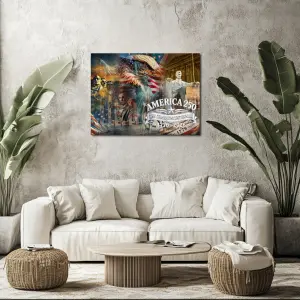
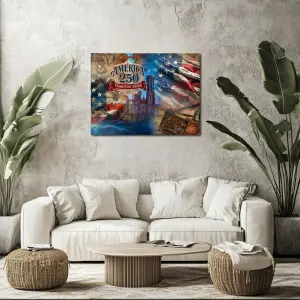
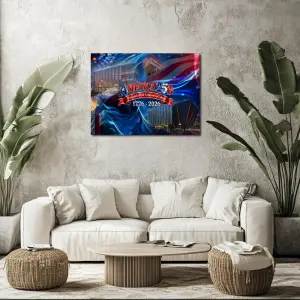
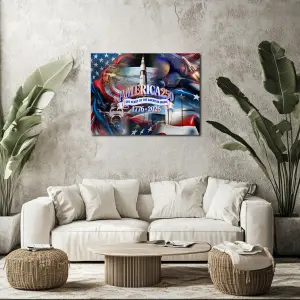
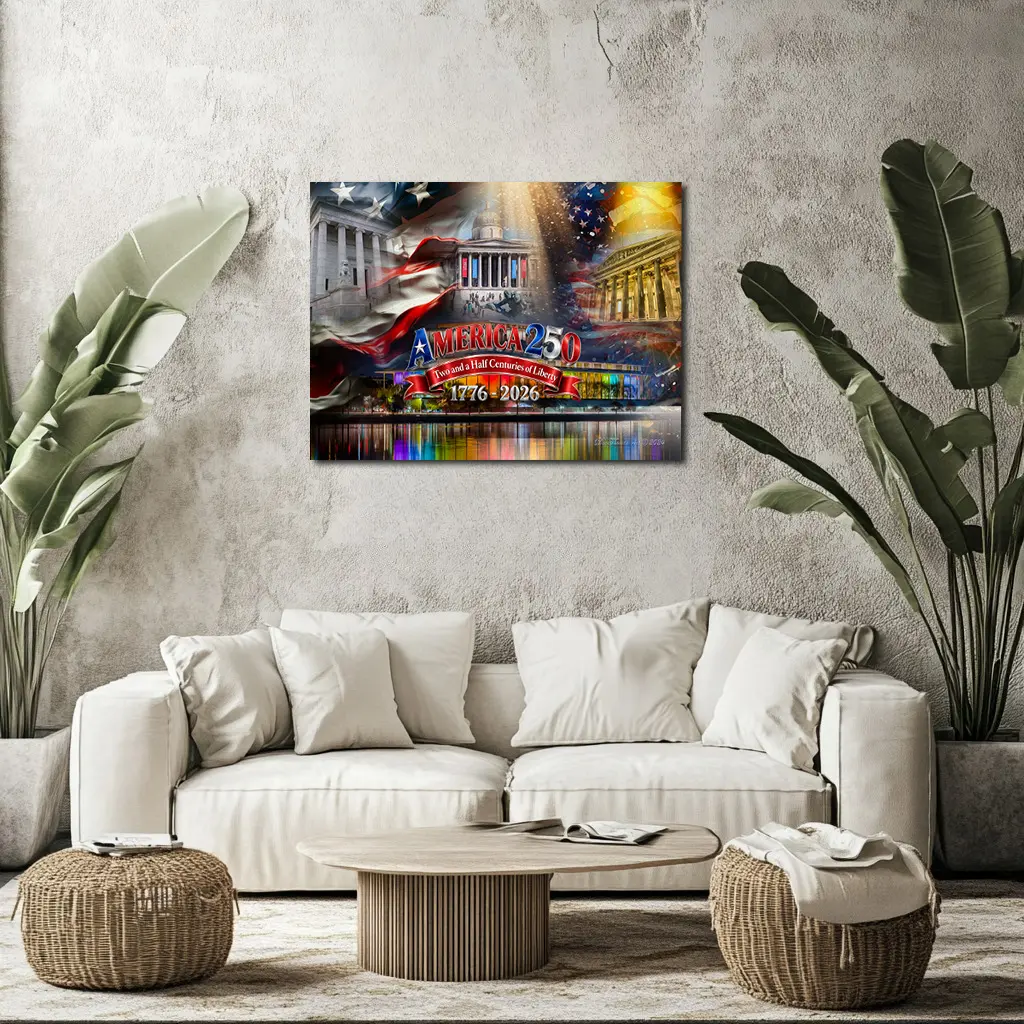
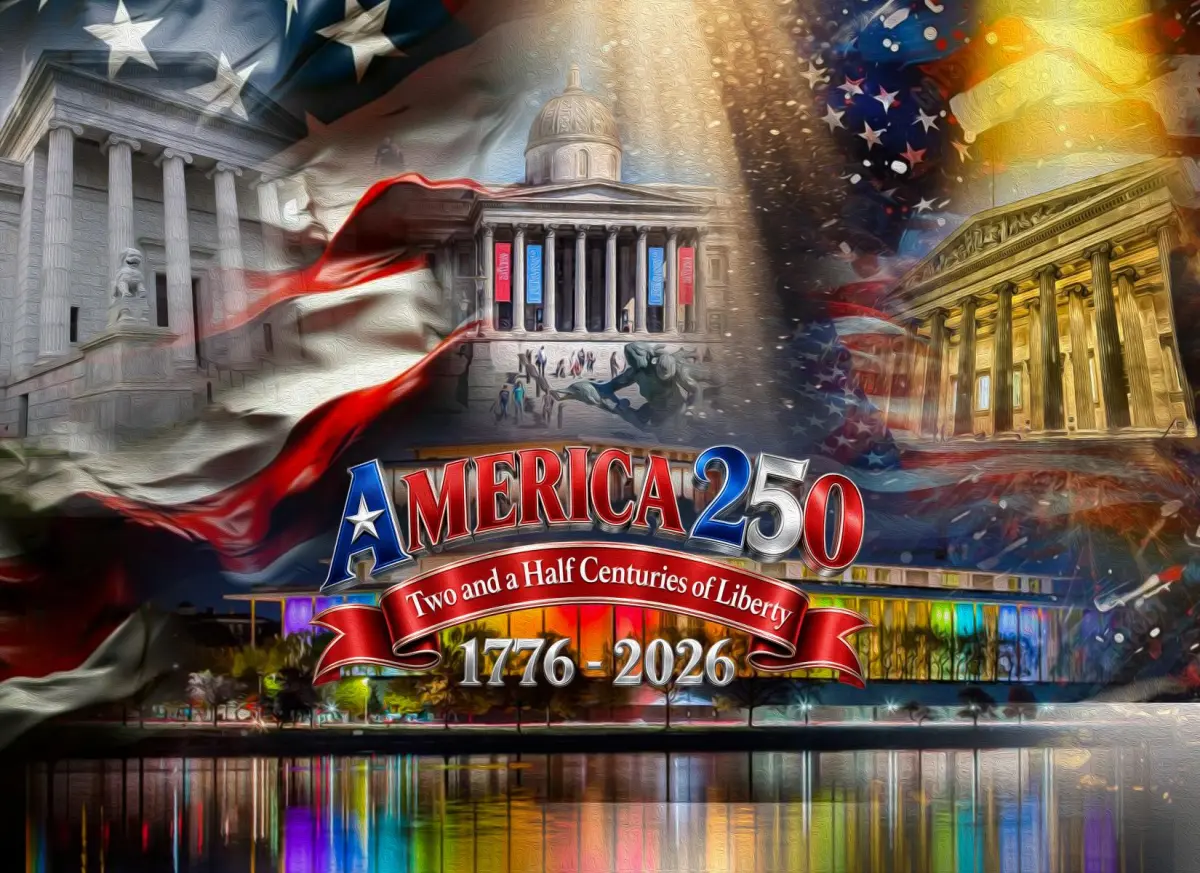
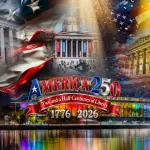
This artwork celebrates America's 250-year journey (1776–2026) through the enduring symbolism of the National Gallery of Art , the John F. Kennedy Center for the Performing Arts , the American flag , radiant light, and reflective water. The description naturally incorporates the history of both cultural institutions, from the National Gallery's founding through Andrew W. Mellon's vision in 1937 to the opening of the Kennedy Center in 1971 as a living memorial to President John F. Kennedy and his belief in the importance of the arts. Rich patriotic colors, luminous lighting, elegant architecture, layered textures, and balanced composition create a visual narrative celebrating creativity, artistic freedom, cultural preservation, and national identity. More than a tribute to museums and performance halls, the artwork honors the generations of artists, musicians, performers, writers, educators, and visionaries whose imagination has enriched American life, affirming that the true soul of a nation is found in the creativity it inspires and the culture it leaves behind.
Please see Below for Details…


Hotline Order:
Mon - Fri: 07AM - 06PM
019-234-09789
When I created this artwork, I wanted to tell a story that often unfolds quietly, yet shapes a nation as profoundly as its laws, its monuments, or its victories. Every civilization is remembered not only by the battles it fought or the buildings it constructed, but by the art it created, the music it composed, the stories it told, and the imagination it inspired. As America celebrates 250 years of independence (1776–2026), I wanted this composition to honor the artists, musicians, dancers, actors, writers, architects, and visionaries whose creativity has become an enduring expression of the American spirit.
At the center of the composition stands the America 250 emblem, accompanied by the words "Two and a Half Centuries of Liberty." I intentionally placed this commemorative symbol where every architectural landmark and every flowing ribbon of color converge. Liberty gave Americans the freedom to speak, create, perform, and dream. Without freedom of expression, culture cannot flourish. This artwork celebrates the idea that artistic creativity is one of democracy's greatest achievements.
Dominating the composition is the magnificent National Gallery of Art, whose grand neoclassical façade rises beneath a sky illuminated with radiant light. I chose the museum as one of the central symbols because it preserves the visual memory of civilization itself. Established in 1937 through the vision and generosity of financier and collector Andrew W. Mellon, the National Gallery of Art opened to the public in 1941 with the belief that world-class art should belong to everyone, not only to private collections. Today, it houses masterpieces spanning centuries, from the European Renaissance to modern American art, making it one of the world's great cultural institutions.
Rather than presenting the Gallery simply as a museum, I wanted it to appear as a temple of creativity. Its elegant columns symbolize permanence, wisdom, and the enduring value of artistic expression. Every visitor who walks through its doors participates in an ongoing conversation between artists separated by centuries but united through imagination. To me, the building represents the belief that art has the power to educate, inspire, challenge, and connect humanity beyond language or borders.
On the left side of the composition appears another monumental institution—the John F. Kennedy Center for the Performing Arts. Opened in 1971, the Kennedy Center serves as the United States' national cultural center for the performing arts. Created as a living memorial to President John F. Kennedy, who believed that a great nation must also be a great supporter of culture, the center has become home to world-class performances in music, ballet, opera, jazz, theater, and dance. I included it because America's cultural legacy is not preserved only through paintings displayed on walls, but also through performances that exist only in the unforgettable moments they are experienced.
I have always admired President Kennedy's belief that "Art is not a form of propaganda; it is a form of truth." That philosophy quietly guided this entire composition. The Kennedy Center reminds us that culture is not an ornament added to society after prosperity is achieved. It is one of the very foundations that gives a nation its identity, compassion, and imagination.
The sweeping American flag flows gracefully across the artwork, embracing both institutions within its stars and stripes. The thirteen stripes recall the thirteen colonies that declared independence in 1776, while the fifty stars represent a nation whose extraordinary cultural diversity has become one of its defining strengths. I wanted the flag to feel alive, almost like a curtain opening before a great performance, symbolizing that American culture continues to evolve with every new voice and every new generation.
Warm rays of golden light descend from above, illuminating the National Gallery and creating the emotional center of the composition. To me, this light symbolizes inspiration itself. Every artist knows the quiet moment when an idea first begins to take shape, and I wanted the descending light to represent that mysterious spark of creativity. It also reflects the role of education, museums, theaters, libraries, and cultural institutions in passing inspiration from one generation to the next.
The vibrant reflections shimmering across the water in the foreground became one of my favorite elements in the composition. Water has always symbolized reflection, memory, and continuity. Here it mirrors the illuminated architecture above, suggesting that the influence of art extends far beyond museum walls or concert halls. Every painting admired, every symphony performed, every play staged, and every poem written creates ripples that continue long after the performance has ended.
Color became one of the strongest storytellers within this artwork. Rich crimson reflects passion, creativity, and the emotional power of artistic expression. Deep blue conveys wisdom, imagination, and intellectual discovery. Brilliant white symbolizes truth, openness, and the universal language of beauty. Warm gold cascading from above represents enlightenment and inspiration, while subtle violet and amber tones introduce a sense of wonder, reminding viewers that creativity often begins where certainty ends.
Lighting moves naturally through the composition. Bright illumination surrounds the National Gallery before gradually extending toward the Kennedy Center and reflecting across the water below. I wanted this movement of light to symbolize how art travels across generations. A masterpiece created centuries ago still inspires a young artist today. A performance experienced for one evening may remain in someone's memory for a lifetime. The interplay between light and shadow reflects the emotional complexity that makes great art meaningful.
Texture adds another layer of storytelling. The smooth marble surfaces of the museums express permanence and dignity, while the flowing folds of the American flag introduce movement and vitality. The shimmering reflections in the water soften the strong architectural geometry, creating harmony between structure and imagination. Tiny points of light scattered throughout the composition resemble stars, reminding us that creativity often begins as a small spark before illuminating the world.
Compositionally, every line guides the viewer toward the National Gallery before expanding naturally to the Kennedy Center and across the reflective water. The balanced placement of these two institutions represents the complementary relationship between the visual arts and the performing arts. One preserves creative achievement across centuries; the other continually creates new artistic experiences that exist only in the living moment. Together they tell the complete story of America's cultural landscape.
Artistically, I blended symbolic realism with contemporary digital collage to unite architecture, patriotic imagery, light, and atmosphere into one harmonious composition. Rather than depicting a single event, I wanted to celebrate the entire creative ecosystem that has enriched American life for generations. Painterly textures, cinematic lighting, layered imagery, and vibrant color grading transform familiar landmarks into symbols of artistic freedom and national identity.
The atmosphere is uplifting, elegant, and deeply reflective. Unlike monuments dedicated to political leadership or military sacrifice, this artwork speaks in a quieter voice. It celebrates the human imagination—the ability to transform ideas into music, stories, paintings, performances, and architecture that outlive the generations that created them. I wanted viewers to feel not only pride in America's artistic institutions but also gratitude for every creator whose work has enriched the nation's cultural heritage.
Every symbol carries its own historical significance. The National Gallery of Art represents the preservation of humanity's artistic achievements and America's commitment to making art accessible to all. The John F. Kennedy Center for the Performing Arts celebrates the living traditions of music, theater, dance, opera, and artistic performance while honoring President Kennedy's vision that culture is essential to national greatness. The American flag symbolizes the constitutional freedoms that allow artistic expression to flourish. The radiant light represents inspiration, while the reflective water embodies memory, continuity, and the enduring influence of creativity. Finally, the America 250 emblem connects every artistic achievement to the nation's broader journey, reminding us that liberty has always nurtured innovation not only in government and science, but also in the arts.
As the artist, I wanted this artwork to express a simple but deeply meaningful truth: a nation's greatest treasures are not only its monuments or its wealth, but the ideas it leaves behind. Paintings, music, literature, dance, architecture, and performance become the emotional memory of a civilization. They preserve its dreams, record its struggles, celebrate its diversity, and inspire future generations to imagine something even greater.
Ultimately, "The Soul of a Nation: The Kennedy Center and the National Gallery of Art Celebrating America's Creative Legacy (1776–2026)" is my tribute to every artist, musician, actor, dancer, writer, architect, educator, curator, and cultural leader whose creativity has helped shape the American experience. It celebrates 250 years of freedom by honoring the limitless power of imagination, reminding us that while history builds nations, art gives them their soul.
Add your review
Your email address will not be published. Required fields are marked *
Please login to write review!
Looks like there are no reviews yet.